
Ductile Iron Castings to ASTM A536
Anaya Enterprises pours ductile iron, also called nodular or spheroidal graphite (SG) iron, in 8 ASTM A536 grades from 60-40-18 up to 120-90-02. Each grade has an EN-GJS equivalent to EN 1563 in the grade table, so you can match a European specification to its ASTM grade.
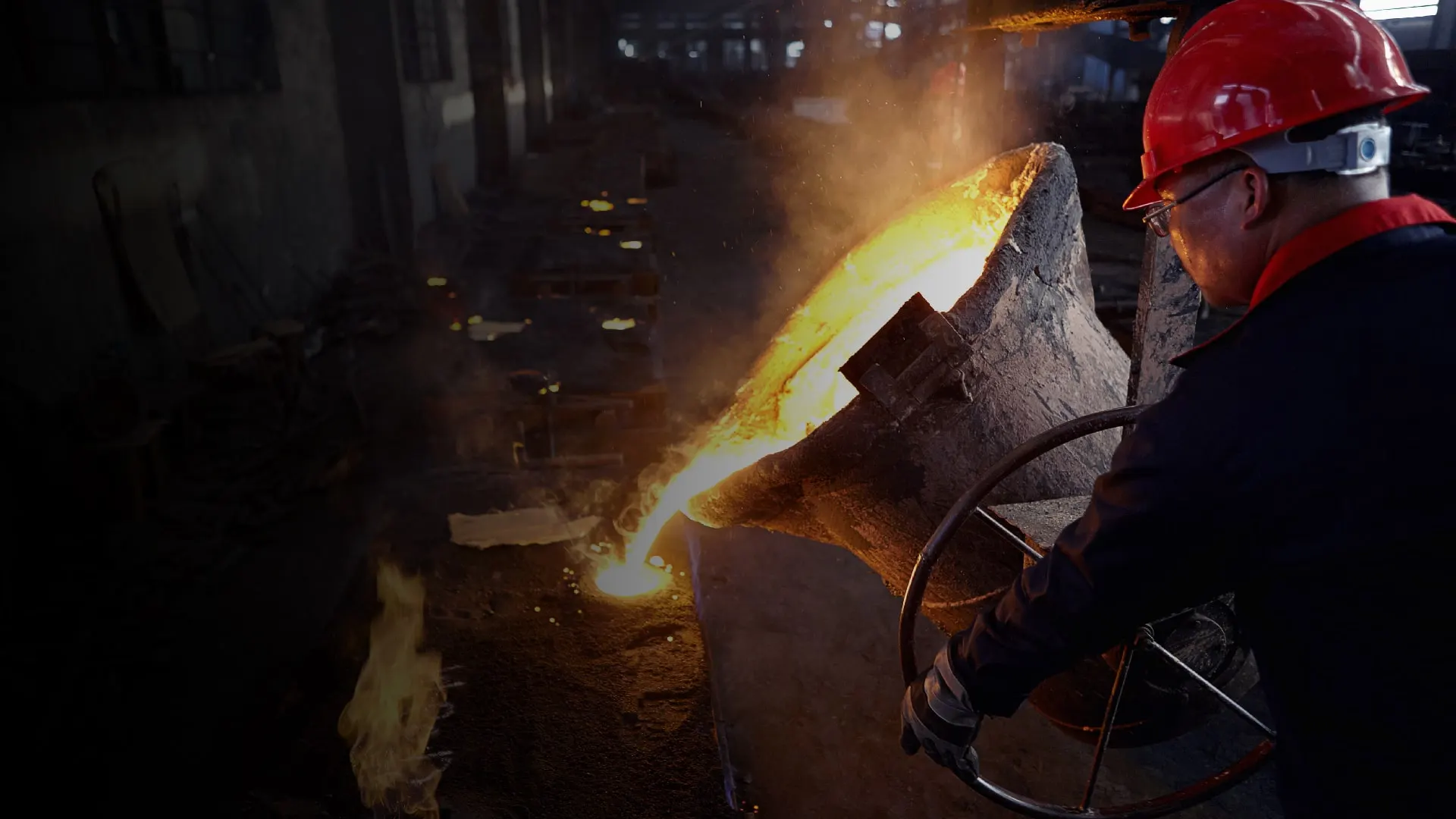
We cast by sand mould or no-bake moulding. Our custom manufacturing team machines castings to your drawings, so you can order a finished component rather than a raw casting.
Reading an A536 Grade
Each A536 grade name gives three minimum values: tensile strength in ksi, yield strength in ksi and elongation in percent. Grade 65-45-12, for example, means at least 65 ksi tensile strength, 45 ksi yield strength and 12% elongation. Higher-strength grades give up ductility, so the grade should follow the load and toughness the part needs.
Choosing a Grade
- 60-40-18: the most ductile grade, with the best impact toughness, for parts that take shock loads or work at low temperatures.
- 65-45-12: a general-purpose grade that balances strength, ductility and machinability.
- 80-55-06: higher strength with moderate ductility, for parts such as gears and heavily loaded housings.
- 100-70-03 and 120-90-02: the highest-strength grades, usually heat treated, for high-load and wear parts where elongation matters less.
- 60-42-10, 70-50-05 and 80-60-03: intermediate A536 grades, poured when a drawing calls for them.
Ductile Iron or Grey Iron?
In ductile iron the graphite forms spheres rather than the flakes found in grey iron. That gives ductile iron far higher strength and elongation while keeping good castability and machinability, which is why it often replaces cast steel for parts that carry load. Grey iron remains the better choice where vibration damping matters most.
What to Send With Your RFQ
- A drawing, sample or photos of the part
- The A536 grade, or the EN-GJS grade you need to match
- Quantity: prototype, batch or production run
- When you need the parts delivered